Before I stepped into the Pediatric Ward of the Nepal Cleft & Burn Hospital in Kirtipur, I’ll be honest, I didn’t understand the Teddy Bear Initiative. I remember thinking, “Wouldn’t money or food be more practical? Why a stuffed toy?” Coming from a safe and privileged world, I had no idea how unprepared I was for what I was about to see.
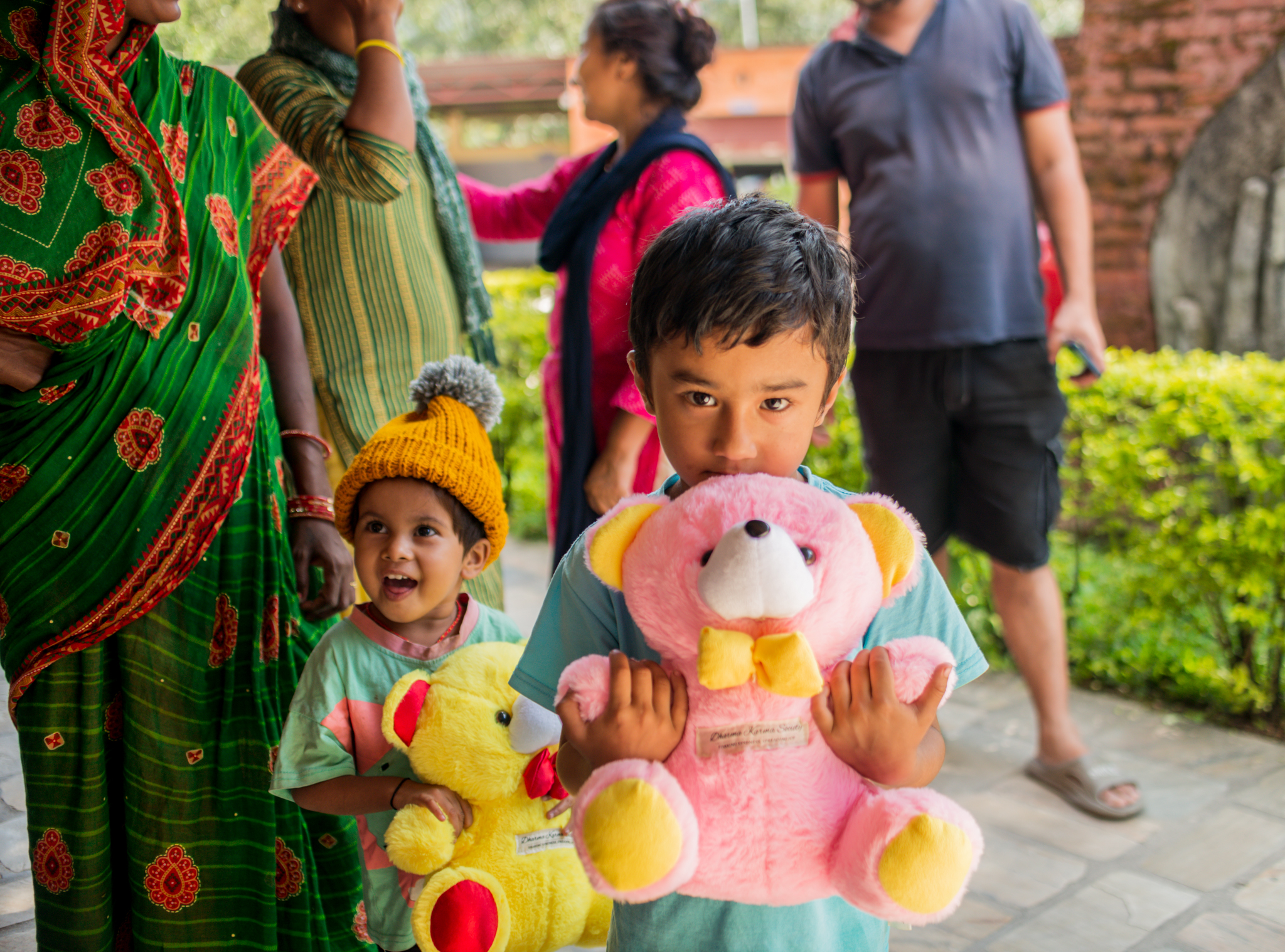
Every year, the Dharma Karma Society on behalf of Dharma Adventures visits the children’s ward at the burnt hospital and hands over teddy bears along with basic supplies for those seeking treatment at the hospital. These bears are meant to offer comfort to young burn survivors; children facing one of the most painful and traumatic experiences imaginable. For many of them, it becomes the first gift they receive that is just for them.
The numbers alone are overwhelming. According to WHO, 95% of burn injuries and deaths occur in low- and middle-income families. In Nepal, burn injuries account for 5% of disabilities, with more than 55,000 cases every year, many preventable. Burn injuries in children remain heartbreakingly underexplored.
But when I walked through that ward, the statistics disappeared. They turned into names, faces, and tiny bodies wrapped in bandages, some with burns covering nearly half their delicate skin. The silence, the muted cries, the fear in the air… it was almost too much to bear. All I could think was: Will they ever feel like themselves again? Will they get the chance to laugh, to play, to heal emotionally, as well as physically?
One moment still stays with me. A child, maybe 6 years old, peeked from behind his mother, staring shyly at the teddy bears. She hesitated for so long before she finally reached out. And when the bear touched her arms, her whole expression changed. Her eyes softened. She smiled. A smile so pure it pierced right through me. Yes, the food and essentials mattered to the parents. But to her, that bear was everything.

That was the moment it finally made sense to me. The teddy bear wasn’t just a toy, it was a friend. A companion. Something to hold on to during the darkest moments of his young life.
After that moment, I couldn’t bring myself to hand the teddy bears directly anymore. The emotional weight felt overwhelming. Their suffering, their fragility, and their courage all hit me harder than I expected.
The visit left me feeling grateful, humble, and honestly, shaken. The carefree life I’ve known suddenly felt like an extraordinary privilege. These children carry scars, physical and emotional, that will stay with them forever.
The experience grounded me deeply, both personally and as part of Dharma Adventures. It reminded me of something essential: Life is good. Life is precious. Gratitude is not optional; it is essential.
I hope to return, not just to visit, but to actively support these children. Statistics will never capture their reality. To understand, you have to see their eyes, feel their bravery, and witness their resilience firsthand.
If I had to sum up the experience in one sentence, I would simply say, C’est la vie.
To the children and hospital staff, Thank you for your courage, patience, and strength. You inspire me to be better, kinder, and more grateful.
— Ritigya